.svg)
Resources
.png)
Eastern Point Trust Company Appoints IRS Veteran Sarah E. Russell as Vice President of Tax and Wealth Planning
Seasoned Senior IRS Legislative Counsel to Lead Innovative Tax Strategies for Lawsuit Settlements and Wealth Planning.
Warrenton, VA, August 09, 2025 --(PR.com)-- Eastern Point Trust Company (EPTC) is pleased to announce the appointment of Sarah E. Russell, Esq., as Vice President of Tax and Wealth Planning. With an exemplary academic record and extensive experience as Legislative Counsel for the Internal Revenue Service (IRS) Office of Legislative Affairs, Ms. Russell brings unparalleled expertise in federal tax law to enhance EPTC’s capabilities in navigating the complex taxation of lawsuit settlements and wealth planning. Her appointment underscores EPTC’s commitment to delivering sophisticated, technology-driven tax-based trust and wealth planning solutions tailored to the needs of legal professionals, the settlement planning community, financial advisors, and their clients.
Ms. Russell’s multi-decade tenure at the IRS equipped her with a comprehensive understanding of the federal tax code and its practical implications. In her role as Legislative Counsel, she analyzed proposed tax bills from introduction through enactment, producing detailed tax analysis and guidance that directed IRS Business Operating Divisions in implementing new laws. Her analyses covered a broad spectrum of tax issues, including corporate and individual taxation, estate and gift taxes, disaster tax relief, and IRS administrative procedures. She regularly attended Congressional hearings and bill markups, providing critical insights to IRS leadership on compliance, enforcement, and administrative challenges. Additionally, Ms. Russell drafted authoritative responses to Congressional inquiries and briefed senior IRS officials, including the Director of the Office of Legislative Affairs, on pivotal tax policy matters.
A distinguished law school graduate, Ms. Russell earned a reputation for rigorous legal research, incisive analysis, and clear, persuasive writing. Her academic achievements provided a strong foundation for her work at the IRS, where she demonstrated an ability to distill complex tax code provisions into actionable strategies. Licensed to practice law in the Commonwealth of Virginia, she combines technical proficiency with a pragmatic approach, making her a thought leader in the tax and wealth planning arena.
At EPTC, Ms. Russell will focus on the nuanced tax treatment of lawsuit settlements and wealth planning, an area of significant concern for attorneys advising clients on litigation outcomes. Ms. Russell’s expertise enables her to craft strategies that optimize tax outcomes while ensuring compliance with federal regulations, providing attorneys and planners with a trusted partner to enhance client results.
“Sarah Russell’s appointment strengthens our ability to serve the legal community with precision and foresight,” said Joe Sharpe, President and Chief Operating Officer of Eastern Point Trust Company. “Her deep knowledge of federal tax law, honed through years at the IRS, positions her to deliver innovative solutions for the taxation of lawsuit settlements. We are confident she will be an invaluable resource for attorneys seeking to maximize value for their clients.”
Sam Kott, Vice President and Corporate Counsel at EPTC, added, “Sarah’s ability to navigate the intricacies of the Internal Revenue Code is exceptional. Her practical experience inside the IRS in translating legislative changes into practical guidance will empower attorneys and planners to address settlement taxation with confidence. We are privileged to welcome her to our leadership and legal team.”
Ms. Russell expressed enthusiasm for her new role: “I am honored to join Eastern Point Trust Company and contribute to its mission of reengineering and expanding trust solutions through advanced technology. My goal is to support attorneys in resolving the tax complexities of settlements, ensuring their clients achieve optimal financial outcomes with clarity and compliance.”
A Virginia native, Ms. Russell is recognized for her professionalism, ethical standards, and proficiency with technology, qualities that align with EPTC’s forward-thinking approach. She is poised to lead initiatives that streamline tax planning processes, providing attorneys and planners with efficient and transparent tools to serve their clients effectively.
About Eastern Point Trust Company
Eastern Point Trust Company, headquartered in Warrenton, VA, is a premier provider of trust, tax, and wealth planning solutions, leveraging cutting-edge technology to deliver accessible, transparent, and cost-effective solutions. Visit www.easternpointtrust.com for more information.
Eastern Point Trust Company
Contact
Eastern Point Trust Company
Rachel McCrocklin
540-428-2944
www.easternpointtrust.com
Disclaimer
The information in this press release is for informational purposes only. It does not constitute legal or investment advice, nor is it an offer to sell or a solicitation to purchase a security or service in any jurisdiction.

Must a Court Approve a Qualified Settlement Fund?
A Qualified Settlement Fund (QSF) is a vital tool for settling legal disputes, especially those involving large sums of money. A QSF is a statutory trust or escrow account established to hold and distribute settlement funds to the involved parties. Its main goal is to offer a centralized mechanism that ensures the settlement process is fair, efficient, and transparent.
Must a Court Approve a QSF?
No, a court does not need to approve a QSF. IRC §468B-1(c)(1) provides that a non-court governmental authority has the power to approve a QSF.
(c) Requirements. A fund, account, or trust satisfies the requirements of this paragraph (c) if -
(1) It is established pursuant to an order of, or is approved by, the United States, any state (including the District of Columbia), territory, possession, or political subdivision thereof, or any agency or instrumentality (including a court of law) of any of the foregoing and is subject to the continuing jurisdiction of that governmental authority;
The approving government authority registers the QSF and monitors its management to ensure adherence to the settlement agreement and relevant laws and regulations.
The IRS’s Role
The Internal Revenue Service (IRS) also plays a role in every QSF. For example, the IRS has established rules and procedures for the tax treatment of QSFs and requires certain information or documentation before issuing the EIN linked to the creation of a QSF.
The question of whether a court must approve a QSF (or may a non-court governmental authority approve the QSF) is fully settled in the applicable regulations, as they provide that the “United States, any state (including the District of Columbia), territory, possession, or political subdivision thereof, or any agency or instrumentality (including a court of law) of any of the foregoing” may approve a QSF. The approving governmental authority will have a significant role in approving and overseeing the establishment and administration of the QSF.
As noted in a previous article about maximing settlement benefits, using a QSF can provide significant tax benefits to the parties involved in a legal dispute. Under U.S. tax law, if a taxable settlement is paid directly to a plaintiff, it is generally taxable as income. However, suppose the settlement is paid into a QSF. In that case, the funds are not taxable until distributed to the plaintiff. This singular feature provides significant tax planning opportunities for the parties involved in a legal dispute.
To establish a QSF in the United States, the parties involved in a legal dispute must petition the governmental authority to approve the establishment of the QSF. The governmental authority will review the proposed QSF agreement and determine whether it meets the qualification requirements. If the governmental authority approves the QSF, the settlement funds can then be deposited into the QSF and distributed to the parties involved.
It is important to note, however, that the role of the governmental authority in establishing and administering a QSF can vary depending on the jurisdiction and the specific facts of the case. In some instances, the governmental authority may take a more active role in overseeing the QSF. However, in other cases, the governmental authority might approve the establishment of the QSF and leave the fund’s administration to other parties.
In addition to the approval from the governmental authority, a QSF is also subject to regulatory tax law enforcement by the IRS. The IRS’s involvement stems from the fact that QSFs are often used to resolve disputes involving taxable proceeds liabilities; the IRS wants to make sure that the funds in the QSF comply with relevant tax laws.
Obtaining an EIN
The parties involved in a legal dispute must submit an EIN application to the agency to obtain an EIN from the IRS. The IRS’ EIN-related systems define what an eligible QSF is.
What it is...
- A settlement fund is a fund for the principal purpose of settling and paying claims against the electing taxpayer under Internal Revenue Code (IRC) Section 468B
- A fund, account, or trust is a settlement fund if it meets the following requirements:
- Governmental order or approval requirement
- Resolve or satisfy requirement
- Segregation requirement
All settlement funds must file a Form 1120-SF (U.S. Income Tax Return for Settlement Funds). A settlement fund cannot elect to file a Form 1041 (U.S. Income Tax Return for Estates and Trusts). If you do not intend to file Form 1120-SF, your organization is not considered a settlement fund.
Note: As shown by the IRS’s website, no “Court Order” is required; suggestions to the contrary do not reconcile with the plain reading of the regulations or the IRS’s clearly stated criteria on their website.
[guide]
QSF Background
It is important to note that establishing and administering a QSF trust can be complicated and may differ depending on the jurisdiction of the approving government authority and the specific details of the case. Therefore, it is recommended to consult with experienced legal and financial professionals to identify the particular requirements for establishing and managing a QSF in your jurisdiction. Experience tells us using a court to establish a QSF can take months and cost thousands of dollars in legal fees and court costs. However, solutions like QSF 360 provide quick, affordable, and straightforward solutions with experienced government agencies.
In addition to tax benefits, there are several other advantages to using a QSF in settling legal disputes. One of the main advantages is that a QSF can provide a centralized mechanism for the settlement of claims, which can help to reduce the administrative burden on the parties involved in the dispute. This feature can be vital in cases involving both single and multiple plaintiffs or defendants or in cases involving complex legal issues.
Another advantage of using a QSF is that it can help to provide a measure of security for the parties involved in the dispute. By depositing the settlement funds into a QSF, the parties can ensure that the funds will be available to pay any future claims or liabilities that may arise. This element can be essential in cases with a risk of future claims or liabilities, such as cases involving product liability or environmental claims (Learn more: QSF vs Environmental Remediation Trust).
Summary
While a QSF must be approved by a governmental authority, as defined by the regulations, a court does not need to be involved. Platforms like QSF 360 provide a quick and easy online method to create and administer a QSF without the costs and delays typically associated with court created QSFs.
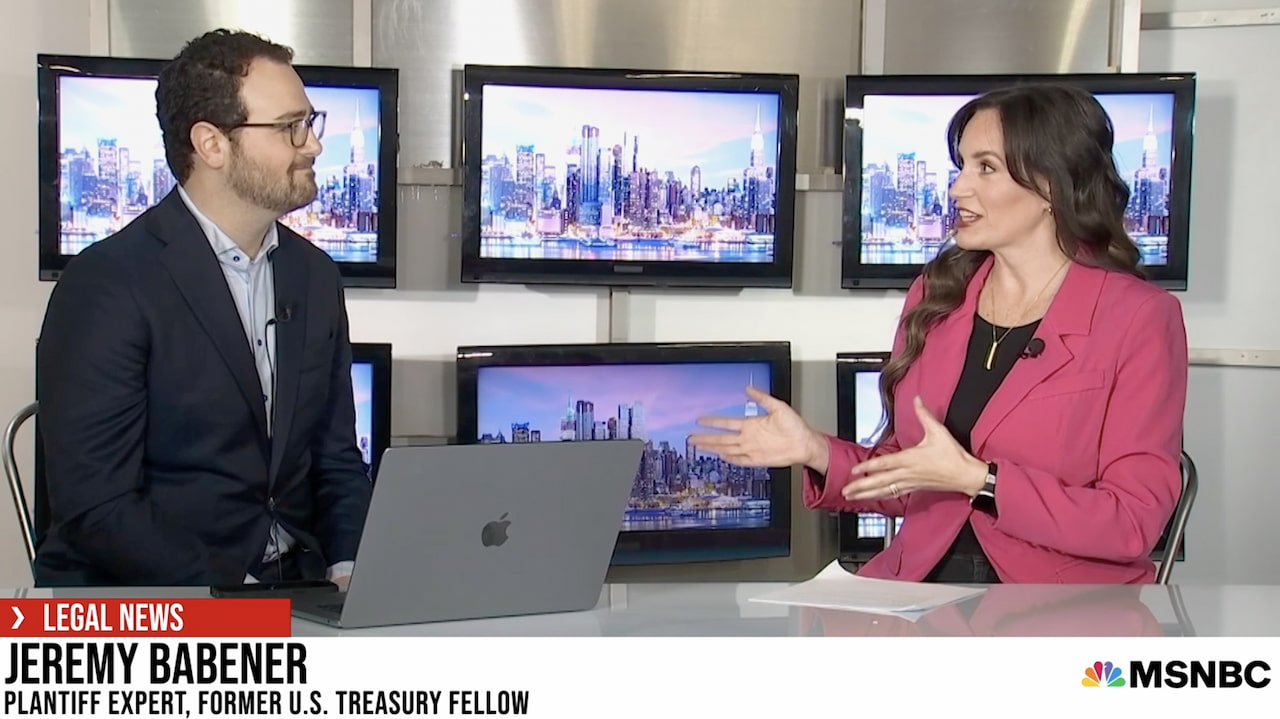
MSNBC: Inside the Financial Tools Helping Plaintiffs Keep More
MSNBC featured Eastern Point’s Chief Trust Officer Rachel McCrocklin and Tax Strategist Jeremy Babener in a segment on sophisticated settlement planning for plaintiffs.
“Having the funds paid directly into a qualified settlement fund allows for the preservation of tax and other settlement options that may have otherwise been lost.”
Learn how proper planning transforms the largest financial transaction of a plaintiff’s life from a rushed decision to lasting support.

Fox News: How Plaintiffs Can Save With Settlement Planning | Structured Settlements and QSFs
Billions are paid out in personal injury settlements every year, but how much plaintiffs keep depends on the planning that happens around the settlement. In this segment from Fox News, tax attorney Jeremy Babener and national settlement expert Rachel McCrocklin of Eastern Point explain why today's settlements are more than just payouts; they’re sophisticated financial transactions.
From Qualified Settlement Funds (QSFs) to structured settlements and The Plaintiff Fund, proper settlement planning can preserve settlement options, minimize taxes, and protect access to government benefits.
"Qualified Settlement Funds are unique in that they stop the clock."
Learn how QSFs “stop the clock” on tax decisions.
Understand how litigation finance and tax rules affect outcomes.
Discover tools every plaintiff lawyer and settlement planner should know.

CNN: High-Tech Solutions for Settlement Planning
CNN dives into technological advancements boosting the legal industry with Eastern Point's Chief Trust Officer Rachel McCrocklin and Tax Strategist Jeremy Babener.
"We focus on turnkey software to create qualified settlement funds."

Taxation of Settlements: Understanding Attorney's Ethical Duties Regarding Settlement Tax Consequences
I. Introduction: Beyond the Gross Settlement Number
In the resolution of legal disputes, the settlement agreement represents the culmination of advocacy, negotiation, and strategy. For the client, however, the figure memorialized on paper is not the ultimate objective. The accurate measure of success is the net, after-tax value of the recovery—the funds that are available to compensate for harm, rebuild a business, or secure a future. An attorney who focuses exclusively on maximizing the gross settlement amount, without due consideration for its tax implications, risks delivering a Pyrrhic victory and fundamentally fails to serve the client's most critical economic interest.
This area of legal practice represents a high-stakes intersection of three powerful and complex domains: the ethical mandates of the American Bar Association (ABA) Model Rules of Professional Conduct, the intricate and often counter intuitive provisions of the Internal Revenue Code (IRC), and the ever-present threat of a legal malpractice claim for failing to navigate the first two correctly. A litigator may brilliantly secure a multi-million-dollar settlement, only to see its value decimated by an avoidable tax liability that was neither anticipated nor addressed. The ensuing client dissatisfaction can easily ripen into a formal complaint or a lawsuit alleging professional negligence.
This paper will argue that an attorney's core ethical duties of competence, communication, and candor under the ABA Model Rules are not mere aspirational goals but create a concrete, affirmative obligation to address the tax implications of a settlement. This duty is not contingent on the attorney being a tax expert. Instead, it requires the attorney to possess sufficient knowledge to spot the relevant tax issues and, where those issues exceed their expertise, to fulfill the corollary duty to advise the client to consult with a competent tax specialist. Failure to do so not only constitutes a breach of the Rules of Professional Conduct but, as a growing body of case law demonstrates, exposes the attorney to significant malpractice liability. Navigating this terrain is no longer an optional value-add for the sophisticated practitioner; it is a fundamental component of modern, ethical legal representation.
II. The Foundational Ethical Framework: An Analysis of the ABA Model Rules
The ABA Model Rules of Professional Conduct provide the essential architecture for an attorney's responsibilities. While no single rule is titled "Duty to Advise on Tax Implications," a synthesis of three core principles—competence, communication, and candid advice—establishes a comprehensive ethical mandate to address the tax consequences of a settlement.
A. Rule 1.1: The Duty of Competence in a Specialized World
The bedrock of a lawyer's professional obligation is found in Model Rule 1.1, which states, "A lawyer shall provide competent representation to a client. Competent representation requires the legal knowledge, skill, thoroughness, and preparation reasonably necessary for the representation."[1] This duty is not a static or uniform standard; it is a dynamic obligation that scales with the nature of the client's matter.
The official comments to Rule 1.1 provide critical guidance for determining the requisite level of competence. They list several relevant factors, including "the relative complexity and specialized nature of the matter, the lawyer's general experience, [and] the lawyer's training and experience in the field in question."[2] While the comments acknowledge that in "many instances, the required proficiency is that of a general practitioner," they explicitly caution that "Expertise in a particular field of law may be required in some circumstances."[3] The labyrinthine tax treatment of settlement proceeds, governed by a complex web of statutes, regulations, and judicial doctrines, unequivocally falls into this "specialized" category, demanding a higher level of knowledge than typical litigation practice provides.
For the attorney who does not possess this specialized knowledge, the Rules provide a clear and mandatory path forward. An attorney can still provide competent representation by either acquiring the necessary learning through "reasonable preparation" or, more practically in most complex tax scenarios, by "associating with or, where appropriate, professionally consulting another lawyer whom the lawyer reasonably believes to be competent."[4] This is not a mere suggestion but a prescribed method for satisfying the duty of competence.
This framework creates a significant potential pitfall for the successful litigator. A litigator's primary expertise lies in developing case strategy, marshaling evidence, and conducting negotiations to secure a favorable gross settlement figure. The very achievement of this goal, however, gives rise to a secondary, yet equally critical, legal issue: the tax treatment of that recovery. This is a distinct and "specialized" field of law as contemplated by the comments to Rule 1.1. The litigator, an expert in their own domain, may suffer from a "competence blind spot," failing to recognize that their formidable litigation skills do not automatically translate to the nuances of tax law.
Malpractice cases such as Philips v. Giles[5] and Jalali v. Root[6] serve as stark reminders that courts do not excuse this blind spot. In such cases, the attorney is held to the standard of care required for the tax issue, not just the underlying litigation. The ethical failure is not in lacking tax expertise, but in failing to recognize that deficiency and take the prescribed remedial action of consulting a specialist, as Rule 1.1 mandates. The successful conclusion of the primary litigation task thus creates a high-risk ethical moment where the attorney's competence is tested in a field they are likely unqualified to navigate alone.
B. Rule 1.4: Communication for an "Informed Decision"
The duty of competence is inextricably linked to the duty of communication. Model Rule 1.4(b) is of paramount importance, mandating that "A lawyer shall explain a matter to the extent reasonably necessary to permit the client to make informed decisions regarding the representation."[7] This is supplemented by Rule 1.4(a), which requires the lawyer to keep the client "reasonably informed about the status of the matter" and to "reasonably consult with the client about how the client's objectives are to be accomplished."[8]
The client's decision to accept or reject a settlement is one of the most critical moments in any representation. Model Rule 1.2(a) reserves this ultimate authority exclusively for the client, stating, "A lawyer shall abide by a client's decision whether to settle a matter."[9] For this authority to be meaningful, the client's decision must be informed. The duty to communicate under Rule 1.4 is the essential mechanism that empowers the client's authority under Rule 1.2. When an attorney receives a settlement offer, they must "promptly inform the client of its substance."[10] The "substance" of a monetary offer is not merely its gross amount, but its practical, after-tax value. Presenting a $1 million offer without mentioning a potential $400,000 tax liability is a failure to explain the matter to the extent necessary for the client to make an informed decision.
This duty to explain is not a passive one; it implies an antecedent duty to investigate and understand what needs to be explained. An attorney cannot explain the tax implications of a settlement if they have not first performed the due diligence to identify them. This issue-spotting is described in the comments to Rule 1.1 as a "fundamental legal skill" that involves "inquiry into and analysis of the factual and legal elements of the problem."[11] Therefore, the communication duty under Rule 1.4 effectively bootstraps the competence duty under Rule 1.1. To fulfill the obligation to explain, the attorney must first satisfy the obligation to be competent by either knowing the tax law or consulting someone who does. The duty to communicate thus prevents an attorney from using ignorance as a shield; if an attorney does not know the tax consequences, they have an ethical duty to find out so they can adequately advise their client.
C. Rule 2.1: The Duty to Render Candid Advice
Beyond competence and communication, Model Rule 2.1 defines the lawyer's role as a "Counselor," requiring the lawyer to "exercise independent professional judgment and render candid advice."[12] This rule broadens the lawyer's advisory function beyond purely legal considerations. Critically, the rule and its comments clarify that in rendering advice, a lawyer may refer "not only to law but to other considerations such as moral, economic, social and political factors, that may be relevant to the client's situation."[13]
The comments explicitly warn against a myopic approach, stating that "Advice couched in narrow legal terms may be of little value to a client, especially where practical considerations, such as cost or effects on other people, are predominant."[14] A potential tax liability is a primary "economic" factor and a direct "cost" of accepting a settlement. Rule 2.1 thus positions the attorney not as a mere legal technician but as a holistic "advisor" who must provide a realistic assessment of the client's situation. For a client inexperienced in financial matters, who may be dazzled by a prominent settlement figure, the "lawyer's responsibility as advisor may include indicating that more may be involved than strictly legal considerations."[15]
Furthermore, the comments to Rule 2.1 forge a direct link back to the duty to seek specialized help. They state, "Where consultation with a professional in another field is itself something a competent lawyer would recommend, the lawyer should make such a recommendation."[16] The comments specifically name "the accounting profession or of financial specialists" as relevant fields. This is not merely a permissive suggestion; it is an integral part of the lawyer's duty as a candid advisor. When the economic reality of a settlement is shaped by complex tax rules, a competent advisor must recommend consultation with a tax professional.
III. The Tax Minefield: A Primer on Settlement Taxation
To fulfill the ethical duties of competence and communication, an attorney must have a working knowledge of the substantive tax law governing settlement proceeds. The rules are complex and often depend heavily on the specific facts and circumstances of the case. The Internal Revenue Service (IRS) generally begins with the proposition under IRC § 61 that all income is taxable unless a specific exclusion applies.
Pro Tip: Eastern Point Trust Company is a resource for a wide array of settlement taxation experts and solutions from Qualified Settlement Funds to the Plaintiff Recovery Trust - which, with proper planning and timing, can mitigate the plaintiff's taxation of attorney fees.
A. The "Origin of the Claim" Doctrine: The Guiding Principle
The foundational principle for determining the taxability of a settlement is the "origin of the claim" doctrine.[17] Long employed by the IRS, this judicial rule dictates that the tax treatment of a recovery depends on the nature of the underlying claim it is intended to resolve. The central question to ask is: "In lieu of what were the damages awarded?" If a plaintiff sues for lost profits from a business, the settlement proceeds are treated as a replacement for those profits and are taxed as ordinary business income. If an employee sues for unpaid wages, the recovery is taxed as wages, often with payroll tax withholding. Conversely, suppose a plaintiff sues for damage to a capital asset, like their personal residence. In that case, the recovery may be treated as a non-taxable return of capital that reduces their basis in the property. This “origin of the claim” principle makes the initial complaint and the specific claims asserted within it critical documents for any subsequent tax analysis.
B. The IRC § 104 Exclusion: The Critical "Personal Physical Injury" Gateway
The most significant and heavily litigated exclusion in the context of settlements is found in IRC § 104(a)(2). This provision excludes from gross income "the amount of any damages (other than punitive damages) received... on account of personal physical injuries or physical sickness."
The operative word in the modern statute is "physical." Before 1996, the exclusion was broader, applying to all "personal injuries," which courts had interpreted to include not only damages for bodily injuries, but also purely emotional or reputational harm. The 1996 amendment dramatically narrowed the exclusion, creating a strict gateway: for compensatory damages to be tax-free, they must flow from a "personal physical injury or physical sickness."
This statutory change created a crucial distinction. Damages for emotional distress, such as anxiety or depression, are generally taxable if they arise from a non-physical event like employment discrimination or defamation. However, if that same emotional distress is a direct result of a demonstrable physical injury—for example, the trauma resulting from a car accident—then the damages for that distress are also excludable under § 104(a)(2). This makes the careful documentation of physical harm and its causal link to emotional suffering a paramount strategic consideration in both litigation and settlement negotiations.
C. Dissecting the Settlement: Tax Treatment of Common Components
Most settlements are not monolithic and may compensate a plaintiff for various types of harm. A competent advisor must be able to dissect the settlement and analyze the tax treatment of each component. IRS Publication 4345, Settlements—Taxability,[18] provides a helpful guide for this analysis.
- Lost Wages/Business Income: As noted, if the recovery is for lost wages in a non-physical injury case (e.g., wrongful termination), it is taxable as ordinary income and is generally subject to FICA and other payroll tax withholding, reported on Form W-2. If the recovery is for lost business profits, it is taxable as self-employment income, reported on Form 1099, and subject to self-employment taxes. However, if lost wages are the result of time away from work "on account of" a personal physical injury, those lost wages can be excluded from income under § 104.
- Emotional Distress: As discussed above, recovery for emotional distress is taxable unless it originates from a personal physical injury. If taxable, the recovery amount can be reduced by any medical expenses paid for treatment of the emotional distress that were not previously deducted.
- Punitive Damages: The tax treatment of punitive damages is unequivocal: they are always taxable as ordinary income. The exclusion in § 104(a)(2) explicitly carves out punitive damages. This rule applies even if the underlying claim is for a severe physical injury that results in a tax-free compensatory award.
- Interest: Any interest paid on a settlement or judgment, whether pre-judgment or post-judgment, is always taxable as ordinary interest income and is not excludable under § 104.
- Attorneys' Fees: A typical and dangerous misconception among clients is that they are only taxed on their net recovery after legal fees. The Supreme Court's landmark decision in Commissioner v. Banks definitively held that a plaintiff's gross income includes the full amount of the recovery, even the portion paid directly to their attorney under a contingent fee agreement.[19] While IRC § 62(a)(20) now provides an "above-the-line" deduction for attorneys' fees and court costs in certain unlawful discrimination cases, this "gross-up and deduct" mechanism is not a perfect wash. The full gross income amount can affect calculations for other tax items and may have different consequences for state income tax purposes. This is a critical and complex point of advice that must be communicated clearly to the client.
Pro Tip: The above-the-line deduction in § 62(a)(20) is a clear audit signal for the IRS – expect your client to be subject to an examination if utilizing this deduction. Exercise caution appropriately.
Pro Tip: IRC §62(a)(20) requires a claim of “unlawful discrimination” to have been made. If the origin of the claim and the complaint did not plead and substantiate unlawful discrimination stemming from an unlawful act under one of the enumerated statutes in § 62(e)(1) through (17), or federal, state, or local law providing for the enforcement of civil rights, or certain laws that regulate aspects of the employment relationship, then IRC § 62(a)(20) will NOT apply. Furthermore, attempting after-the-fact reclassification of the statement or award proceeds will likely trigger adverse IRS tax consequences for both the plaintiff and possibly the plaintiff's lawyers. Be careful to advise against such after-the-fact misclassifications – the IRS would consider such as tax fraud.
Table of Recovery Types
Generally taxable in all fee arrangements. If the claims are for ”unlawful discrimination” or made pursuant to certain sections of the False Claims Act or the Social Security Act, the client may be eligible for an above-the-line deduction, but this can have other tax effects. Exercise caution; this issue is complex.
D. The Strategic Importance of the Settlement Agreement
The settlement agreement itself is a document of profound strategic importance for tax purposes. The IRS has stated that it is often reluctant to disturb an allocation of damages made between parties in a settlement agreement, provided the settlement agreement is: (i) entered into in an adversarial context; (ii) at arm's length; and (iii) the allocation is consistent with the substance of the underlying claims. If the agreement is silent as to the allocation, the IRS will look to the intent of the payor and the origin of the claim to characterize the payments. This situation rarely favors the plaintiff-recipient.
Pro Tip: Exercise caution when trying to influence the tax outcome. By negotiating for and including express allocation language in the final agreement—for example, designating a reasonable portion of the proceeds to non-taxable damages for physical injuries and a separate portion to taxable damages for emotional distress or lost wages—the attorney can create a strong evidentiary record for the client. A well-drafted settlement agreement that thoughtfully allocates the proceeds can be the client's most compelling piece of evidence in the event of an IRS audit and is a tangible manifestation of the attorney's fulfillment of their ethical duties. However, the IRS will quickly dismiss settlement agreements that do not parallel the pleaded claims. If you did not plead unlawful discrimination, then you will be unable to recharacterize the settlement agreement allocation to justify the above-the-line deduction based on an enforceable civil right violation.
Pro Tip: In cases involving a judicial award, even greater risks are present. It is wholly unwise to attempt to reclassify the award basis. There is little doubt the IRS will reject such attempts, and to the extent that the order is not specific, the origin of the claim doctrine and the pleading will guide the IRS tax treatment.
IV. The Malpractice Precipice: When Ethical Lapses Lead to Liability
When an attorney fails to meet the ethical obligations of competence, communication, and candor regarding settlement tax consequences, the risk of a disciplinary complaint is matched by the more immediate financial threat of a legal malpractice lawsuit.
A. Defining the Standard of Care for Tax Advice in Settlements
The standard of care in a legal malpractice action is generally that of a reasonably prudent attorney under similar circumstances. However, as established by the ethical rules, when a matter involves a specialized area of law like taxation, the standard of care is elevated to that of a competent specialist in that field. Courts have consistently held attorneys liable for malpractice for failing to provide competent advice on the tax consequences of litigation and settlements. This liability is not confined to tax attorneys; it extends to any lawyer handling a settlement that has foreseeable tax implications. The failure to advise on well-established tax principles, or the failure to structure a settlement to achieve a more favorable tax outcome when it was possible to do so, can constitute a breach of this standard.
B. Analysis of Key Malpractice Precedent
Case law provides clear examples of this principle in action. In Philips v. Giles, a divorce attorney was found to have committed malpractice for failing to advise his client that alimony payments she received under a settlement would be taxable income.[20] In Jalali v. Root, an attorney was held liable for providing incorrect advice about the tax consequences of a settlement.[21] These cases illustrate that the duty is twofold: an affirmative duty to give necessary advice and a negative duty not to give incorrect advice. The risk is particularly acute because the tax treatment of a recovery often turns on nuanced case law rather than a single, clear statute, and even a court's characterization of an award is not binding on the IRS. While a comprehensive review of settlement malpractice claims suggests they have been historically rare, the potential for liability is undeniable, especially where an attorney fails to recognize and act upon opportunities to minimize a client's tax burden.
C. The Evolving Definition of "Tax Malpractice"
Recent legal scholarship and case law suggest that the very definition of "tax malpractice" is expanding. Traditionally, the term was confined to errors made directly in a tax-related context, such as misinterpreting a provision of the IRC or missing a tax filing deadline. However, a more modern view is emerging: tax malpractice can encompass any form of professional negligence where the resulting damages manifest as an adverse tax consequence for the client.
Cases like Serino v. Lipper[22] and Bloostein v. Morrison Cohen LLP[23] from New York are illustrative of this trend. In Bloostein, for instance, the underlying negligence was the law firm's failure to advise the client about a change to a default provision in a loan agreement. This non-tax error triggered a forced sale of assets, which in turn caused the client to lose valuable tax deferral benefits and incur a massive, immediate capital gains tax liability. The court treated this as a viable tax malpractice claim, focusing on the nature of the damages (the increased taxes) rather than the nature of the initial error. This evolution means that even attorneys in seemingly non-tax fields, like contract or corporate law, must be vigilant about how their actions could inadvertently create adverse tax outcomes for their clients.
D. The Paradox of Settlement Finality and Malpractice Liability
A significant tension exists between the long-held judicial policy favoring the finality of settlements and the right of a client to hold their attorney accountable for negligent advice that induced that settlement. Courts are generally reluctant to unwind a settlement that a client has voluntarily accepted. Some jurisdictions, like Pennsylvania in the now-widely-rejected Muhammad v. Strassburger case, even created a rule of near-immunity for attorneys in this context, fearing a flood of "settler's remorse" litigation.[24]
However, the overwhelming majority of jurisdictions have rejected this immunity-based approach. The prevailing view, articulated in cases like New Jersey's Ziegelheim v. Apollo,[25] holds that a client's acceptance of a settlement does not bar a subsequent malpractice claim against the attorney who advised them. The logic is that the client's consent to the settlement was predicated on the attorney's professional advice. If that advice was rendered incompetently, in breach of the attorney's duties, then the client's consent was not truly "informed" as required by Rule 1.4. The core of the malpractice claim is not simply that the settlement was a bad deal in hindsight, but that the client's decision-making process was fundamentally flawed due to the attorney's failure to provide competent counsel. In this way, the attorney's foundational ethical duties of competence and communication become the very tools a plaintiff can use to pierce the shield of settlement finality. An attorney cannot hide behind a client's consent if that consent was procured through a breach of the attorney's professional obligations. This paradox underscores a critical point: the diligent performance of pre-settlement duties is the key not only to a valid and fair settlement for the client but also to a durable defense against a future malpractice claim.
V. Practical Guidance and Risk Mitigation
Given the significant ethical obligations and malpractice risks, attorneys must adopt a proactive and systematic approach to addressing tax issues in settlements. This involves clear communication from the outset, prudent engagement of specialists, and meticulous documentation.
A. The Engagement Letter: The First Line of Defense
The engagement letter is the foundational document of the attorney-client relationship and the first and best opportunity to manage expectations and define the scope of the representation. It should delineate the services the attorney will and will not provide.
In this context, many attorneys employ a "tax advice disclaimer" clause. Such a clause explicitly states that the attorney or firm is not being retained to provide tax advice and that the client is responsible for consulting with their independent tax professional. A typical clause might read:
"Client acknowledges that Attorney has not been retained to provide tax advice concerning any settlement or judgment. The tax consequences of any recovery are complex and depend on the client's individual circumstances. Client is hereby advised to consult with an independent tax advisor regarding the tax implications of this matter, and Client agrees that they are not relying on Attorney or Attorney's firm for any such advice."
However, a disclaimer is not a panacea and has ethical limitations. An attorney cannot use a disclaimer to waive their fundamental duty of competence under Rule 1.1. For example, a litigator cannot ignore an obvious and significant tax issue that a reasonably prudent general practitioner would be expected to spot. The disclaimer is most effective not as a tool to feign ignorance, but as a mechanism to formally fulfill the advisory duty under Rule 2.1. It serves its purpose best when an affirmative recommendation that the client seek tax counsel is coupled with the opportunity to do so before any final decisions are made.
B. Engaging Tax Counsel: Best Practices for Collaboration
The most reliable way to mitigate risk and ensure competent representation is to associate with qualified tax counsel when necessary. The decision to engage a specialist should be triggered by certain red flags, including but not limited to:
- Settlement or awards with any taxable components.
- Settlements involving multiple types of damages (e.g., lost wages, emotional distress, and property damage).
- Cases involving significant punitive damage awards.
- Employment-related claims with back pay, front pay, or severance components.
- Any case where the tax-free status of the award under IRC § 104 is not certain.
- Settlements involving the transfer of property or stock.
When engaging a tax specialist, the primary attorney must fulfill their duties under Rule 1.1. This involves more than simply passing along a name. The attorney should conduct reasonable due diligence into the tax counsel's experience, reputation, and the prudence of the recommendation made. Furthermore, the client must give informed consent to the association, understanding the role of the tax counsel and any associated costs. Clear communication between the litigation attorney, the tax attorney, and the client about the scope of their respective roles is essential for a smooth and effective collaboration.
C. Documenting the Advice and the Client's Decision
Meticulous documentation is the attorney's best defense against a future malpractice claim alleging a failure to advise. As one analysis notes, a key challenge in settlement malpractice cases is the lack of a "paper trail" for oral advice. Attorneys should therefore make it a standard practice to:
- Memorialize Advice in Writing: After any significant conversation about settlement terms and tax implications, the attorney should send the client a follow-up letter or email summarizing the discussion. This should include a clear statement of the potential tax issues identified and the advice given, including the recommendation to consult a tax professional.
- Share Communications: The client should be copied on relevant correspondence with opposing counsel regarding settlement allocations and with any tax counsel engaged on the matter.
- Obtain a Written Acknowledgment: The client's final sign-off on the settlement agreement should be accompanied by a separate acknowledgment. This document should confirm that the client has been advised of the potential tax consequences, understands that the attorney is not a tax guarantor, and has been allowed to seek advice from an independent tax professional. This documentation transforms an abstract ethical duty into a concrete, defensible record of professional diligence.
VI. Conclusion: Fulfilling the Role of the Trusted Advisor
The ethical duties of an attorney when advising a client on a settlement extend far beyond securing the highest possible gross recovery. The interwoven obligations of competence under Rule 1.1, communication for an informed decision under Rule 1.4, and candid, holistic advice under Rule 2.1 converge to create an undeniable professional responsibility to address the settlement's tax consequences. These rules establish that an attorney's ignorance of tax law is not a defense, but rather a trigger for the duty to either gain the requisite knowledge or associate with someone who possesses it.
The complex landscape of the Internal Revenue Code, particularly (i) the "origin of the claim" doctrine, (ii) the narrow "physical injury" exclusion under IRC § 104, and (iii) the high audit risk of the IRC § 62(a)(20) above-the-line deduction present a minefield for the unwary. Yet, it also presents an opportunity for the diligent advocate to add immense value by strategically structuring settlements and drafting agreements that protect the client's net recovery.
Ultimately, fulfilling these duties is a matter of both client protection and self-protection. By proactively identifying tax issues, clearly communicating the risks and opportunities to the client, recommending specialized counsel when necessary, and meticulously documenting the entire process, an attorney transforms their role from a simple advocate to a trusted advisor. This comprehensive approach is the most valid form of client advocacy, as it focuses on the client's actual financial outcome. In doing so, the attorney not only serves the client's best interests but also builds the most robust possible defense against the significant and growing risk of professional liability.

Qualified Settlement Fund Approval – Listicle of Legal Requirements
Qualified Settlement Funds (QSFs), also referred to as a §468B Trust or Settlement Fund, are a legal mechanism established under Section 468B of the Internal Revenue Code. This mechanism allows for the efficient management and distribution of funds in complex litigation, particularly in cases involving multiple claimants.
The primary benefits of a QSF include deferring taxation for plaintiffs until they receive their settlement funds, providing flexibility in distributing the settlement proceeds, and allowing time to address lien resolution, claims administration, or other post-settlement issues. Additionally, defendants benefit by obtaining an immediate release from liability upon transferring the settlement funds into the QSF.
Approval Process
Navigating the world of QSFs can be complex, but understanding the approval process is crucial. Here, we examine the primary legal requirements and misconceptions surrounding the approval process:
Establishment by Court Order
§ 1.468B-1(c)(1) requires that a QSF obtain the approval of a “Governmental Authority,” which establishes the fund’s legitimacy. There is no requirement that the approval of a Qualified Settlement Fund must come from a court; such suggestions demonstrate a lack of applicable experience and knowledge of IRC § 468B. Without such authorization, the fund is not “qualified” and will not confer the associated tax benefits.

Establishing Before Appeals
It is possible to establish and obtain governmental approval before the appeals process related to the underlying lawsuit is resolved. However, disputes among the claimants may continue after the establishment of the QSF post-settlement.
Extinguishment of Defendant’s Liability
The 468B settlement fund and the associated settlement agreement of judicial order should completely extinguish the defendant’s liability, resulting in no tail liability.
Qualified Settlement Fund Administrator Appointment
A QSF administrator must be appointed, which is critical in managing the Qualified Settlement Fund administration. Always look for a licensed fiduciary with extensive experience, a proven track record, and avoid escrow-based QSF arrangements, which often lack operational qualifications.
Jurisdiction Retention
The approving 468B Governmental Authority must retain jurisdiction over the fund. This ongoing oversight ensures proper management and distribution. However, when applicable, the court approving the settlement terms or issuing the judicial award retains jurisdiction over the settlement and judicial order terms.
Resolving Claims Against Defendants
§ 1.468B-1(c)(3) requires that the QSF be established “to resolve or satisfy one or more contested or uncontested claims that have resulted or may result from an event (or related series of events) that has occurred, and that has given rise to at least one claim asserting liability.” So-called “Firmwide QSFs,” which comingle unrelated claims, do not meet the requirements of § 1.468B-1(c)(3).
Meeting IRC § 468B Requirements
The fund must meet the requirements of IRC § 468B and the related Treasury Regulations (1.468B-1 et seq.).
Each of the preceding requirements is crucial. Failing to meet even one could jeopardize the entire process and the associated tax treatment. As legal and settlement professionals, we must ensure compliance.
Don’t let the complexities of QSFs intimidate you. With this knowledge, you’re better equipped to navigate the court approval process successfully. Stay informed, stay compliant, and ensure your Qualified Settlement Fund withstands legal scrutiny.
For more details, refer to the comprehensive article on QSF approval requirements.

Qualified Settlement Fund (QSF) Creation - List of Key Points Lawyers Need to Know
1. Court Approval is Not Mandatory
- Court approval to establish a Qualified Settlement Fund is NOT required.
- IRC § 468B-1(c)(1) allows non-court “governmental authorities” to approve its creation.
2. Governmental Authority Approval
- QSFs can be approved by various government entities, including federal, state, or local agencies.
- The approving authority oversees QSF administration to ensure compliance with the terms of the judicial award and associated regulations.
3. IRS Involvement in Approval Process
- The IRS plays a role in supervising QSFs through tax regulations, rules, and EIN issuance.
- The QSF administrator must ensure compliance with IRS requirements for QSF establishment and administration.
4. Establishing
- Parties must petition a governmental authority to create and approve establishment.
- The authority reviews the proposed trust agreement for qualification requirement compliance.
5. Advantages Beyond Tax Benefits
- QSFs provide tax benefits for both the plaintiff and defendant, offer timing flexibility, and reduce administrative costs and burdens.
- They also facilitate the satisfaction of liens and the resolution of any secondary issues or disputes.
6. Streamlined Creation Options
- Establishment methods via courts can be time-consuming and costly.
- Platforms such as QSF 360 offer faster, more cost-effective solutions, along with skilled and qualified settlement fund administration.
7. IRS Filing Requirements
- The QSF administrator must file annually Form 1120-SF (U.S. Income Tax Return for Settlement Funds).
- Form 1041 (U.S. Income Tax Return for Estates and Trusts) is not applicable in this case.
8. Life Cycle
- §468B funds operate on a calendar-year basis and come into existence upon approval by the governmental authority.
- The fund administrator must ensure that the fund meets all IRS requirements, regardless of whether the funding has been made.
This listicle offers a summary overview. Always consult with experienced QSF administration professionals for specific guidance on Qualified Settlement Funds administration.
You Have Needs,
We Have Expertise
Discover trust and settlement solutions you won’t find anywhere else – thoughtfully designed to protect assets, simplify processes, and deliver peace of mind.
Expert guidance, every step of the way.
.svg)